
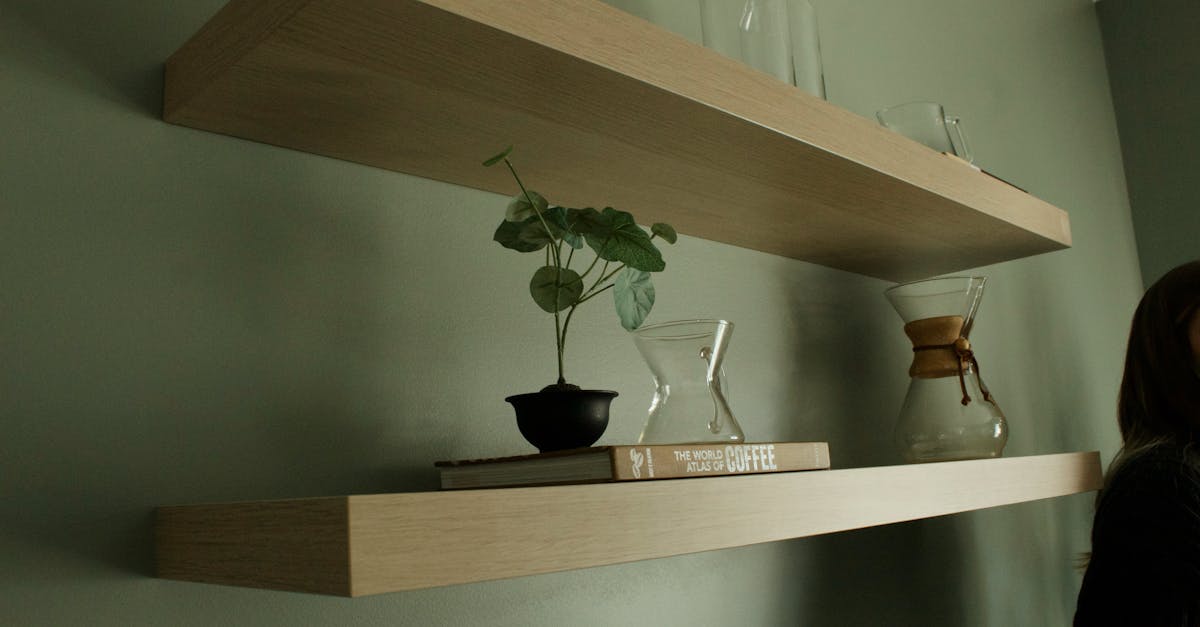
Floating shelves look clean, modern, and impossibly simple — until you’re standing in the hardware aisle wondering which of seventeen anchor types will keep your bookshelf from becoming a floor decoration. The difference between a shelf that holds for years and one that sags after three months comes down to matching the right wall mounting hardware to your wall type and understanding what stud finding actually requires.
This guide walks through the full floating shelf installation process with specific hardware names, weight capacity math, and the stud-finding technique that prevents the “I should have hired someone” moment six months later.
This article contains affiliate links. We recommend these products because we use them, and your purchase supports FixerDaily at no extra cost to you.
What you’ll need
Tools:
- Electronic or magnetic stud finder ($15–$40; Zircon MetalliScanner or Bosch Truvo)
- 24-inch level (spirit or digital)
- Drill with ⅛-inch bit for pilot holes
- Socket set or wrench (10mm–16mm, depending on bracket fasteners)
- Tape measure
- Pencil
- Straightedge (for deflection testing after installation)
Materials:
- Floating shelf brackets (Knape & Vogt 1191 or Everbilt steel brackets: $20–$50 per pair)
- Wall anchors or screws matched to wall type (see Hardware Selection below)
- Plastic or wood shims (for leveling if needed)
- Masking tape (for marking studs before drilling)
Know before you start:
- Your wall type: tap it with knuckles; hollow sound = drywall, solid = plaster or brick
- Rough shelf weight including contents (books = ~10 lb per running foot; decor = ~5 lb)
- Room location and vibration exposure (kitchens and laundry areas need different planning than living rooms)
Before you start
Floating shelf installation hits moderate risk because drilling into the wrong spot can crack plaster, miss studs entirely, or punch through electrical wiring hidden behind drywall. According to the U.S. Consumer Product Safety Commission, proper wall anchoring prevents thousands of tip-over and collapse injuries annually. Three essential safety steps:
- Turn off power to the wall if you’re drilling near outlets or switches. A non-contact voltage tester ($15–$25) confirms whether wiring runs behind your chosen spot.
- Wear safety glasses when drilling overhead or into masonry.
- Test-drill in an inconspicuous area first if you’re working with plaster-over-lath or an older home with unpredictable framing. This confirms what you’re dealing with before committing to bracket-sized holes.
Step 1: Diagnose your wall substrate and find studs
Before touching a drill, figure out what you’re actually mounting to. The knock test catches most cases but fails on composite walls, drywall-over-plaster, or regional framing variations that don’t follow standard patterns.
Full substrate diagnostic:
-
Check building age and permits — Homes built before 1950 likely have plaster-over-lath; 1950–present usually have drywall. Local building department records can confirm framing type for your area.
-
Perform the knock test — Rap your knuckles along the wall. Hollow sound means drywall over studs; solid thud everywhere suggests plaster-over-lath or masonry.
-
Test-drill in multiple spots — Drill small pilot holes (⅛-inch) in three locations along your intended shelf line. Note depth, resistance, and what comes out on the bit. Drywall punches through at ½ inch; plaster resists more and may crumble; hitting wood at 1–1.5 inches means you’ve found a stud.
-
Use an electronic stud finder — Scan horizontally along the wall at your desired shelf height. When the finder beeps or lights up, mark both edges of the stud with masking tape — studs are about 1.5 inches wide. Once you’ve found the first stud, measure 16 inches and then 24 inches from its center to predict the next stud location, then verify with the finder.
-
Confirm with another test hole — Drill a small pilot hole where you expect the stud. If the bit goes in hard and stays straight, you’ve hit wood. If it breezes through, there’s no stud — fill the hole with a toothpick and wood filler.
This diagnostic catches hidden substrate problems before you commit to bracket-sized holes. Older homes in particular can have plaster degradation, non-standard framing, or wall modifications that aren’t visible from the surface.
Step 2: Choose wall mounting hardware based on wall type, weight, and location

The hardware determines whether your shelf holds 20 pounds or 100. Room location matters too — kitchens, laundry rooms, and high-traffic areas experience vibration and movement that living rooms don’t. According to professional installation standards, shelves in vibration-prone spaces need 3–4 anchors per bracket instead of 2, and may require annual re-leveling checks as walls settle.
For stud mounting (preferred for shelves over 30 lb): Use screws that penetrate at least 1.5 inches into the stud. Floating shelf bracket kits like Knape & Vogt 1191 or Everbilt steel brackets ($20–$50 per pair) include softwood-rated screws and support 50–100+ pounds per bracket. This is ideal for book-heavy shelves 24–48 inches wide. In kitchens or laundry areas, use 3 screws per bracket instead of 2.
For drywall without studs (shelves under 30 lb): Heavy-duty toggle bolts (Hillman 40-lb rated, $1–3 each) are the strongest drywall option — install 2–3 per bracket depending on weight, and they’ll hold 50–75 pounds per anchor. Plastic expansion anchors ($0.50–$1 each) work for lighter decor shelves under 20 pounds. Key limitation: Drywall anchors fail when weight shifts. Shelves flex over time, and anchors pull free. Avoid drywall-only mounting in vibration-heavy rooms.
For plaster walls: Use expansion anchors rated for plaster, or adhesive-backed brackets like 3M Command strips (7.5–16 lb rated). Avoid toggle bolts in plaster — they can crack edges during tightening. Always test-drill a small hole first; plaster looks solid but may be cracked underneath.
For brick or block: Use lead sleeve or hammer-set masonry anchors. These support 50–100+ pounds per anchor but require a masonry bit and hearing protection.
Hardware selection rule: Calculate total shelf weight plus contents, then choose hardware rated for 2–3× that weight. For book-heavy shelves, assume 10 pounds per running foot; for decor only, 5 pounds per foot. Professional installation guides from Home Depot and Lowe’s consistently recommend this safety margin to account for dynamic loading over time.
Step 3: Mark bracket placement and drill pilot holes
Hold the bracket against the wall at your marked stud location and use the level to ensure it’s perfectly vertical — not horizontal. Floating shelf brackets support weight vertically, and mounting them sideways redistributes the load in ways that cause failure.
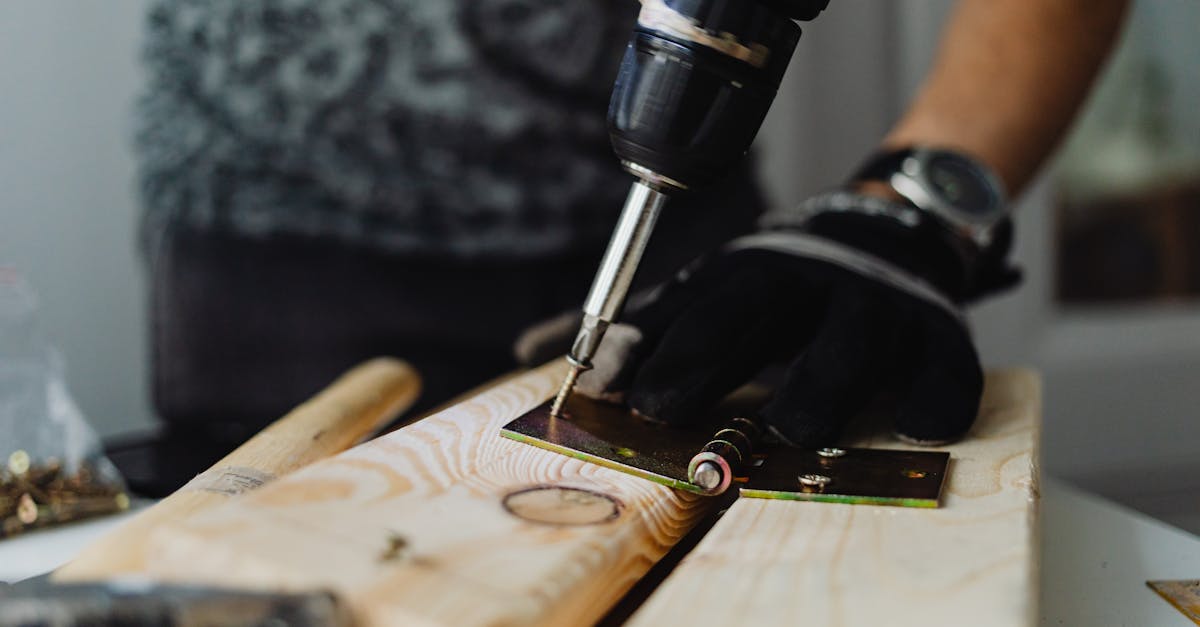
Mark the screw holes with a pencil, remove the bracket, and drill pilot holes at each mark using a ⅛-inch bit. Pilot holes prevent the wood from splitting and keep screws aligned.
For drywall anchors, drill holes sized to the anchor spec (usually ¼ to ½ inch for toggle bolts).
Step 4: Install brackets and check level
Insert screws or anchors through the pilot holes and tighten until snug. Stop when the bracket sits firm against the wall — over-tightening strips threads in wood studs or pulls anchors through drywall.
Check level again before moving on. If the bracket isn’t perfectly level, use plastic or wood shims behind it to adjust. Small gaps between bracket and wall are normal in older homes where walls aren’t perfectly flat.
For a pair of brackets on one shelf, measure the exact distance between them and verify both are level independently and aligned with each other. Misaligned brackets mean the shelf won’t slide on.
Step 5: Slide shelf onto brackets and secure
Most floating shelf brackets have a channel or rod that slides into the back of the shelf. Align the shelf with both brackets and slide it on gently. If the fit is tight, don’t force it — check that both brackets are aligned and the shelf opening is clear of debris.
Once seated, secure with set screws or adhesive per the hardware instructions. Some brackets use hidden screws from underneath; others rely on friction fit.
Step 6: Load-test the shelf before trusting it
Here’s the step most installation guides skip: verifying the shelf can actually hold what you’re planning to put on it. Substrate weakness, anchor inadequacy, and hidden wall problems show up under load, not during installation.
Progressive load protocol:
-
Load to 25% of expected weight — For a shelf you plan to load with 40 pounds of books, start with 10 pounds. Distribute weight evenly across the shelf. Wait 24 hours.
-
Measure deflection — Place a straightedge or level along the front edge of the shelf. Measure any sag at the center point. Mark the measurement.
-
Load to 50% of expected weight — Add another 10 pounds (now 20 total). Wait 24 hours and measure again.
-
Load to full expected weight — Add the final 20 pounds. Measure daily for one week.
Acceptance threshold: Total deflection should not exceed ⅛ inch over the week. If sag continues past ⅛ inch or increases after the third day, the installation has failed — the hardware is under-rated or the substrate is compromised. Remove contents immediately and upgrade to stud mounting or heavier-duty anchors.
This protocol catches failures before you lose a shelf full of books, and gives you confidence that the installation will hold long-term.
Ongoing maintenance for vibration-prone locations
Shelves don’t stay perfectly level forever. Kitchens with nearby dishwashers or washing machines, laundry rooms, hallways with heavy foot traffic, and walls adjacent to garage doors experience vibration and settlement that slowly loosens hardware and shifts shelf position.
Annual maintenance checklist:
- Re-check level — Place your level on the shelf and verify it’s still true. If it’s off by more than one bubble width, the brackets have shifted.
- Inspect anchors — Look for gaps between bracket and wall, cracks in drywall or plaster around fasteners, or visible screw heads pulling away from the wall.
- Re-tighten hardware — Snug up screws or bracket set screws if they’ve loosened. Don’t over-tighten.
- Shim if needed — Small settling gaps can be corrected with plastic shims behind the bracket.
Shelves in living rooms or bedrooms without vibration sources rarely need this attention. Focus maintenance on high-movement areas.
Troubleshooting
Problem: Stud finder reads studs everywhere or nowhere This happens in plaster-over-lath walls or homes with metal conduit. Switch to the knock-and-tap method and confirm with a test hole. If you still can’t locate studs reliably, use heavy-duty toggle bolts rated for your shelf weight instead.
Problem: Shelf won’t slide onto brackets The bracket channels may be misaligned. Loosen the screws slightly, adjust with a level, and retighten. If the shelf itself is warped, sand or plane the opening.
Problem: Anchors pulled through drywall You exceeded the anchor’s weight rating or used the wrong anchor type. Remove damaged anchors, patch the holes, and reinstall with toggle bolts or mount to studs instead.
Problem: Plaster cracked when drilling Stop immediately. Plaster over lath is brittle. Use a carbide bit at low speed and let the bit do the work — don’t press hard. If cracks spread, fill them with plaster repair compound before proceeding.
Problem: Shelf sags in the middle but brackets are solid The shelf span is too wide for the bracket spacing or the shelf material is too thin. Add a third bracket at the center point, or replace with a thicker shelf. Particle board and MDF sag more than solid wood or plywood.
When to call a professional
Call a handyman or contractor if:
- Your wall is cracked plaster-over-lath and you see cracks spreading when you test-drill. This needs structural assessment before adding shelf load.
- You can’t locate studs after trying electronic finders, knock-and-tap, and test holes. Non-standard framing or steel studs require professional assessment.
- You’re installing shelves over tile, marble, or other high-value surfaces. Masonry drilling risks cracking, and mistakes are expensive.
- Your shelf will support more than 75 pounds per bracket or span more than 48 inches. Load-bearing shelves need structural verification, especially on exterior walls.
- The wall has active water damage or mold. Address the underlying issue before installing shelves — damp drywall won’t hold hardware.
FAQ
How do I know if my wall has studs?
Most interior walls in US homes built after 1950 have wood studs spaced 16 or 24 inches apart. Use an electronic stud finder to scan horizontally at shelf height, then verify with the knock-and-tap method. If the wall sounds solid everywhere, you may have plaster-over-lath instead of drywall; test-drill a small hole to confirm.
Can I install floating shelves without hitting studs?
Yes, but only for lighter shelves under 30 pounds total weight. Use heavy-duty toggle bolts rated for at least 2–3× your shelf weight. Drywall anchors alone won’t support book-heavy shelves long-term — they pull free as the shelf flexes under load.
What’s the strongest drywall anchor for floating shelves?
Toggle bolts rated for 50–75 pounds per anchor (like Hillman heavy-duty toggles) are the strongest option when studs aren’t available. Install at least two per bracket and calculate total shelf weight before choosing anchor quantity.
How far apart should floating shelf brackets be?
For shelves 24–36 inches wide, brackets should be spaced 16–24 inches apart or mounted at stud locations. Shelves over 36 inches need at least three brackets to prevent center sag. Follow the bracket manufacturer’s max span guidelines — over-spanning causes shelf flex even if the brackets are rated for the weight.
Do floating shelves in kitchens need different installation than living rooms?
Yes. Kitchens, laundry rooms, and high-traffic areas experience vibration from appliances and foot traffic. Use 3–4 anchors per bracket instead of 2, and plan to re-check level annually. Living room shelves on interior walls rarely need this extra attention.
Once your shelves are up, maximize the vertical space with how to organize small closets. For renters, renter-friendly wall decor covers adhesive-backed options that won’t risk your security deposit.