

I’ve moved four times in six years, and every apartment has had one thing in common: not enough closet space. Under-bed storage has saved me from renting storage units three times now, but only after I learned the hard way that a $12 bin that doesn’t fit under your bed frame is worth exactly zero dollars.
The difference between good under-bed storage and junk you’ll curse during your next move comes down to three measurements: height clearance, cost per cubic foot, and how long the thing lasts before the plastic cracks. But there’s a fourth variable most guides skip entirely — what happens when you’re sleeping eight hours a night eighteen inches above plastic containers in a warm, enclosed space.
Quick verdict:
- Sterilite ClearView Latch Box is the best choice for renters who need reliable, stackable storage with zero damage risk
- IRIS USA Rolling Storage Cart is the best choice for frequent-access items like seasonal clothes or craft supplies
- Rubbermaid Roughneck Clear is the best choice for budget-conscious buyers maximizing capacity per dollar
- SpaceSaver Vacuum Bags are the best choice for maximizing absolute capacity when you rarely need to retrieve items
- SimpleHouseware Fabric Organizer is the best choice for ultra-lightweight storage that folds flat when empty
At a glance
| Feature | Sterilite ClearView | Rubbermaid Roughneck | IRIS Rolling Cart | SpaceSaver Vacuum | Fabric Organizer |
|---|---|---|---|---|---|
| Price (as of 2026-07-20) | $18 | $12 | $45 | $25 (4-pack) | $16 |
| Usable capacity | 56 quarts (1.87 cu ft) | 32 quarts (1.07 cu ft) | 45 quarts (1.5 cu ft) | 80 quarts compressed (2.67 cu ft) | 30 quarts (1.0 cu ft) |
| Height clearance needed | 6.5” | 8.25” | 7” | 4” compressed | 6” |
| Cost per cu ft | $9.62 | $11.21 | $30.00 | $9.36 | $16.00 |
| Material | Polypropylene | Polypropylene | Polypropylene | PE/nylon fabric | Non-woven fabric |
| VOC concern | Low after 72hr | Low after 72hr | Low after 72hr | Minimal | Minimal |
| Best climate | All (with ventilation) | All (with ventilation) | All (with ventilation) | Dry (<50% humidity) | Dry to moderate |
| Weight limit (stacked) | 50 lbs | 40 lbs | 30 lbs (wheels) | N/A | 25 lbs |
| Best for | All-purpose reliability | Budget capacity | Easy access | Maximum volume | Renters, move-friendly |
Why under-bed storage beats other bedroom storage solutions
Before I bought my first set of bins, I tried wall shelves (landlord said no holes), a second dresser (couldn’t fit it through the doorway), and those hanging closet organizers (sagged under the weight of winter coats). Under-bed storage is the only option that uses dead space you’re already paying rent for, requires zero installation, and leaves no marks when you move out.
Standard queen and full-size bed frames sit 9 to 12 inches off the floor, creating roughly 16 to 21 cubic feet of usable storage volume — that’s equivalent to four or five medium moving boxes. Platform beds and adjustable bases run lower, typically 6 to 8 inches, which rules out taller bins but still leaves room for low-profile options.
The catch: not all containers fit, and the ones marketed as “under-bed” often ignore real-world clearances like baseboards (which eat 0.75 to 1 inch of depth) and dust ruffles (another 1 to 2 inches). Measure your actual clearance height before you buy anything. I learned this after hauling home three Rubbermaid bins that were 0.5 inches too tall for my metal bed frame.
Material safety: what you’re breathing while you sleep
Plastic storage containers off-gas volatile organic compounds when they’re new — that “new plastic” smell is the giveaway. The EPA lists VOCs as a known indoor air quality concern, and concentrations increase in warm, enclosed spaces. Your bed traps heat; the space underneath can run 5–10°F warmer than the rest of the room in summer.
Polypropylene containers (Sterilite, Rubbermaid, IRIS) release low levels of VOCs compared to PVC or vinyl, and off-gassing drops significantly after the first 72 hours. When I bring new bins home, I unpack them in the garage or on the balcony for three days before sliding them under the bed. The smell dissipates, and I’m not sleeping above fresh plastic fumes.
Fabric organizers skip the off-gassing problem entirely — no petroleum-based resins, no chemical smell. If you’re sensitive to plastic odors or prefer to avoid the issue, fabric is the safer bet for bedroom storage.
How to measure your available space (and your bed frame’s weight limit)
You need three measurements: height clearance, usable depth, and weight capacity.
Height clearance: Measure from the floor to the lowest point under your bed frame — usually the center support bar or side rail. Don’t measure at the corner posts; they’re always higher. Subtract 0.5 inches for carpet compression or uneven floors. That’s your maximum container height.
Usable depth: Measure from the edge of the bed frame to the wall, then subtract 1 inch for baseboards. If you’re storing containers on the long side of the bed, measure the full length minus door swing clearance (if applicable).
Weight capacity: Your bed frame has a weight limit for what it can support in the center span, and overloading under-bed storage can bow or crack support rails. Metal frames with center support legs typically handle 50–70 lbs per quadrant; platform beds with slat systems vary widely (check manufacturer specs). I cracked a $600 platform bed’s center slat by stacking three bins loaded with books directly under the middle — 90+ pounds concentrated in one spot. Spread weight across the full under-bed area, and keep stacked bins under 50 lbs total.
Standard bed dimensions and typical usable volume:
- Twin/Twin XL: 38–39” wide × 75–80” long; ~10–14 cu ft usable (clearance-dependent)
- Full: 54” wide × 75” long; ~16–20 cu ft usable
- Queen: 60” wide × 80” long; ~18–22 cu ft usable
- King: 76” wide × 80” long; ~24–28 cu ft usable
To maximize small bedroom space, aim for containers that use at least 80% of your available height clearance. A 6-inch-tall bin under a 10-inch frame wastes 40% of your storage volume.
Sterilite ClearView Latch Box — best for reliable all-purpose storage
The Sterilite ClearView is the bin I’ve repurchased three times across two apartments and one storage-unit cleanout. It’s not the cheapest or the most feature-rich, but it’s the one I trust to still have working latches after a year of sliding in and out.
At 23.88” × 17.25” × 6.5”, it fits under most standard bed frames with room to spare. The clear plastic lets you see what’s inside without opening it (critical when you have four identical bins lined up), and the latched lid keeps dust out better than friction-fit alternatives. Sterilite manufactures these from polypropylene, a resin that off-gasses less than PVC and holds up well under bedroom temperature swings. My oldest bins are still going strong after six years.
Cost-per-cubic-foot at current pricing: $9.62/cu ft. If you get five years of use out of it (conservative; mine are going on year six), that’s $1.92/cu ft/year.
Strengths:
- Latched lid creates an effective dust and moisture seal with minimal effort
- Clear plastic doesn’t yellow or cloud after repeated exposure to indirect sunlight (my oldest bins are still transparent)
- Latch mechanism is sturdy; I’ve never had one snap off, even under weight
- Low VOC off-gassing after initial 72-hour airing period
Weaknesses:
- Larger footprint means you fit fewer bins side-by-side under a queen bed (typically two, maybe three if you measure carefully)
- Slightly higher cost than budget options like Rubbermaid Roughneck
- Heavier when full; not ideal if you need to slide bins in and out weekly
Best for: Renters and homeowners who want set-it-and-forget-it storage for seasonal items, off-season bedding, or anything that stays put for months at a time. If you’re rotating contents frequently, the rolling cart is a better bet.
Rubbermaid Roughneck Clear — best for budget capacity
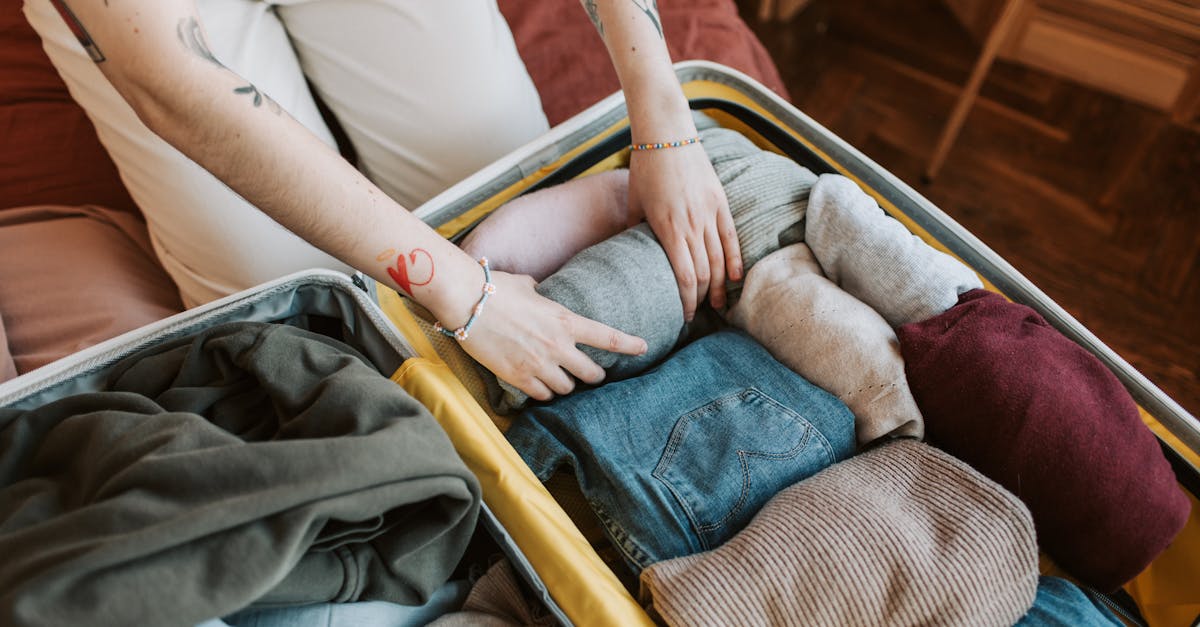
The Rubbermaid Roughneck is the cheapest way to get usable under-bed storage without ending up with bins that crack the first time you slide them across carpet. At $12 per bin, it’s the option I recommend when someone needs to outfit an entire bedroom on a tight budget.
The trade-off: it’s 8.25 inches tall, which disqualifies it for platform beds and low-clearance frames. It also lacks a latching mechanism; the lid friction-fits, which works fine for dry storage but won’t stop dust infiltration if you’re storing fabric.
Rubbermaid constructs these from impact-resistant polypropylene, the same resin family as Sterilite. Initial off-gassing is comparable; air them out for three days if you’re sensitive to plastic smell.
Cost-per-cubic-foot: $11.21/cu ft. Not the best value by volume, but the low upfront cost matters when you’re buying six or eight bins at once.
Strengths:
- Cheapest option per bin; stock up without denting your budget
- Clear plastic (like Sterilite) lets you skip labeling if you’re storing visually distinct items
- Thick, impact-resistant plastic handles minor drops and bumps better than generic dollar-store bins
Weaknesses:
- Height (8.25”) rules it out for low-clearance beds; measure before you buy
- Friction-fit lid leaks dust over time; not ideal for long-term fabric storage
- Plastic is thinner than Sterilite; I’ve had one crack along the bottom edge after two years of heavy use
Best for: Budget-focused buyers with standard-height bed frames (10+ inches clearance) who need basic, functional storage and don’t mind replacing bins every few years.
IRIS USA Rolling Storage Cart — best for frequent access
I bought my first rolling cart after I got tired of dragging a 40-pound bin of craft supplies out from under the bed every weekend. The wheels make retrieval trivial, and the split-lid design (two smaller lids instead of one full-length lid) means you can access half the contents without fully clearing the top.
At $45, it’s the most expensive option here by a significant margin, and the wheels add noise when you roll it across hardwood or tile. But if you’re accessing stored items more than once a month, the convenience pays for itself in saved effort.
Strengths:
- Four swivel casters make retrieval and repositioning nearly effortless, even when fully loaded
- Split lids let you access front or back compartments independently (great for separating frequently-used from rarely-used items)
- 7-inch height fits under most beds while still offering solid capacity (45 quarts)
Weaknesses:
- Price: triple the cost of Rubbermaid Roughneck, quadruple if you’re comparing cost-per-cubic-foot
- Wheel noise on hard floors; if you’re retrieving items late at night in a shared living situation, it’s noticeable
- Casters can leave slight indentations on soft carpet over time (not damage, but visible if you move the cart)
- Lower stacking weight limit (30 lbs) due to wheel stress — don’t pile heavy items on top
Best for: People who store items they need regular access to — seasonal clothes rotation, hobby supplies, kids’ toys that get swapped out monthly. Not worth it for items you touch twice a year.
SpaceSaver Vacuum Storage Bags — best for maximum capacity
Vacuum bags aren’t technically “containers,” but they’re the highest-capacity under-bed storage option by a wide margin. A 4-pack of SpaceSaver bags costs around $25 and can compress bulky items like winter coats, comforters, and pillows down to less than half their original volume.
The downside: once you vacuum-seal something, getting it back out is a commitment. You need to unseal the bag, which usually means you’re re-fluffing the contents (comforters take 24–48 hours to fully expand again) and then deciding whether to re-vacuum or find alternate storage. These are not for items you’ll access often.
Vacuum bags also concentrate moisture risk. If you seal items in a humid climate (Gulf Coast, Pacific Northwest, anywhere indoor humidity regularly tops 60%), condensation can form inside the bag as temperatures fluctuate. I ruined a down comforter in Houston by sealing it in July without running a dehumidifier first — opened it in October to find mildew spots.
Climate-specific guidance for vacuum bags:
- Dry climates (Southwest, mountain West, indoor humidity <40%): Vacuum bags work well; moisture risk is low.
- Moderate climates (most of the Midwest, Mid-Atlantic, indoor humidity 40–55%): Use vacuum bags with desiccant packs inside; check contents once mid-season.
- Humid climates (Southeast, Gulf Coast, Pacific Northwest, indoor humidity >55%): High risk. Only use vacuum bags in climate-controlled rooms with dehumidifiers, or skip them entirely and use ventilated fabric organizers instead.
Strengths:
- Absolute maximum capacity: 80 quarts compressed, fitting under beds with as little as 4 inches clearance
- Protects fabrics from dust and pests better than any rigid container (when sealed correctly)
- Bags fold flat when empty; store them in a drawer until next season
- Minimal off-gassing (polyethylene and nylon, not polypropylene or PVC)
Weaknesses:
- Accessibility is terrible; once sealed, you’re not casually retrieving one item
- Requires a vacuum cleaner (hand-pump versions exist but are slow and exhausting)
- High mold risk in humid climates if contents aren’t bone-dry before sealing
Best for: Seasonal storage in dry to moderate climates, where you pack items away in spring and don’t touch them until fall. Great for winter coats, holiday bedding, or bulky items you can’t bear to throw away but only use once a year.
SimpleHouseware Fabric Organizer — best for renters and frequent movers
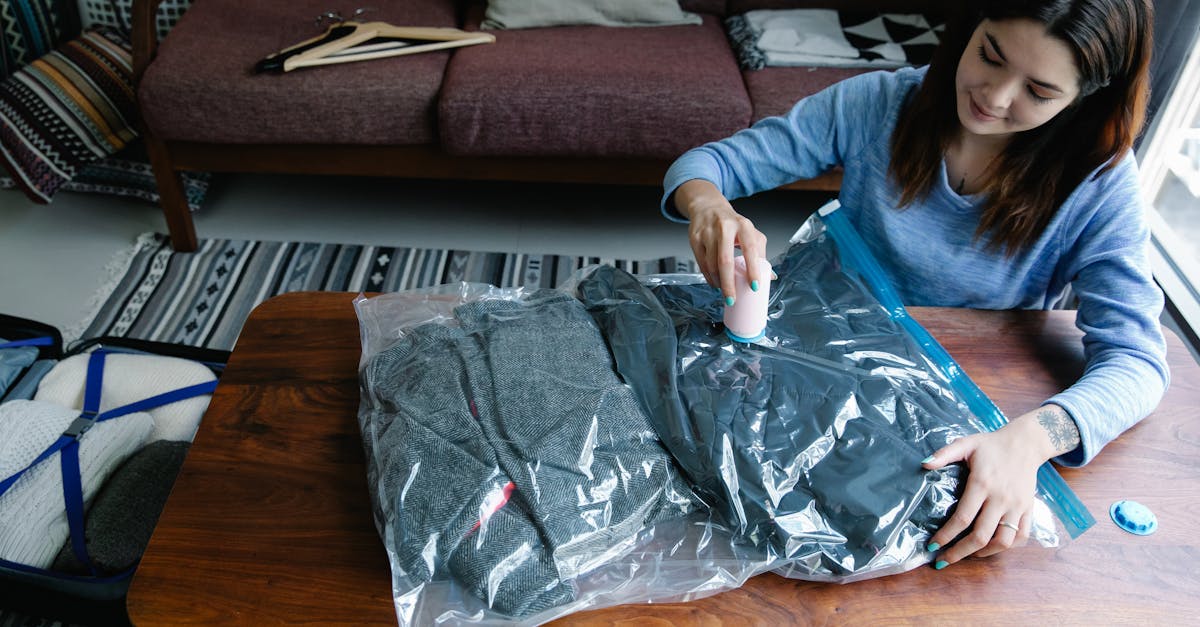
Fabric organizers are the lightest, most move-friendly option, and they fold flat when you’re not using them. At $16, the SimpleHouseware version is cheap enough to buy several without worrying about the investment, and the zippered lid keeps dust out better than I expected.
The fabric construction is also the main weakness: it offers zero protection from moisture, and the structural integrity depends on the zipper and stitching lasting. Mine are still going strong after two years, but I wouldn’t trust them in a basement or anywhere with humidity issues.
Fabric organizers skip the VOC problem entirely — no plastic smell, no off-gassing period. If you’re setting up a nursery or a bedroom where air quality matters more than maximum protection, fabric is the safest material choice.
Strengths:
- Folds completely flat when empty; store it in a closet or drawer between uses
- Lightweight even when full; easy to slide in and out without wheels
- Zippered lid creates surprising dust protection for a fabric product
- Zero off-gassing; safe for bedrooms, nurseries, or anyone sensitive to chemical smells
Weaknesses:
- No moisture barrier; fabric will wick humidity and potentially transfer it to stored items
- Structural collapse under heavy weight; overfill it and the sides bow out, making it hard to slide under low-clearance beds
- Zipper is the single point of failure; if it breaks, the bin is done
- Not suitable for humid climates (>55% indoor humidity) without additional moisture control
Best for: Renters who move frequently and need storage that packs down to nothing, or anyone storing lightweight items (linens, out-of-season clothes, soft goods) in dry to moderate climates where moisture isn’t a concern.
Climate and moisture: matching storage to your region
Humidity is the silent killer of under-bed storage. Plastic bins trap condensation; fabric organizers wick moisture; vacuum bags concentrate it. What works in Phoenix fails in Miami.
Dry climates (indoor humidity <40%): All storage types work. Vacuum bags are especially effective because there’s no moisture to trap. Biggest risk is static buildup in synthetic fabrics.
Moderate climates (indoor humidity 40–55%): Plastic bins with latched lids are safest; they seal well without creating vacuum-level moisture concentration. Add desiccant packs if storing fabrics long-term. Fabric organizers work for non-sensitive items (linens, synthetic clothes). Vacuum bags need desiccant packs and mid-season checks.
Humid climates (indoor humidity >55%): High risk for all sealed storage. Prioritize ventilation over sealing. Fabric organizers with breathable weave are safer than latched plastic bins, which trap humidity. Vacuum bags require dehumidifier support or you will get mildew. Check stored items every 4–6 weeks; rotate contents to prevent moisture buildup.
Basement bedrooms (any climate): Concrete floors sweat; humidity spikes unpredictably. Elevate bins on bed risers or pallets to prevent direct floor contact. Use ventilated storage (fabric or bins with vented lids) and run a dehumidifier year-round. I’ve had mold grow on the outside of a sealed plastic bin in a basement bedroom because condensation formed on the cold plastic surface.
University of Minnesota Extension recommends keeping indoor humidity between 30–50% for optimal home storage conditions — invest in a hygrometer if you’re unsure what you’re dealing with.
Common mistakes and how to avoid them
Buying before measuring: I’ve done this twice. Both times I returned bins. Measure your bed frame clearance and the space you’re trying to fill before you buy anything.
Overloading your bed frame: Stacking three bins loaded with books in the center of the bed concentrates 80+ pounds on a single support point. Spread weight across the full under-bed area, keep stacked bins under 50 lbs total, and watch for sagging or creaking when you sit on the bed — that’s your frame telling you it’s overloaded.
Sealing damp items: Moisture trapped in an airtight container (vacuum bag or latched bin) grows mold. Let everything dry completely — and I mean completely — before sealing. I ruined a comforter this way and had to throw it out.
Storing new plastic bins immediately: That chemical smell is VOCs off-gassing. Unpack bins in a garage, balcony, or well-ventilated room for 72 hours before sliding them under your bed. The smell clears, and you’re not breathing plastic fumes while you sleep.
Ignoring climate: Vacuum-sealing winter coats works in Colorado. It invites mildew in Louisiana. Match your storage type to your local humidity, or pay for it in ruined fabrics.
Stacking without checking limits: The Consumer Product Safety Commission warns against stacking storage containers in ways that create tip-over hazards, especially in homes with children. Under-bed storage eliminates most of this risk, but if you’re stacking bins outside the bed area, check weight limits. Most bins max out around 50–70 pounds of stacking weight; wheeled carts handle less (30–40 lbs).
Renter vs. owner considerations
For renters: Stick with options that leave zero marks and move easily. Fabric organizers and vacuum bags are the lightest; Sterilite bins are durable enough to survive multiple moves without cracking. Avoid anything with hard plastic wheels that might dent soft flooring, and confirm with your landlord if you’re concerned about carpet indentations (they’re rare, but rolling carts can cause them).
For owners: You have more flexibility with weight and permanence. Rigid plastic bins can be heavier and bulkier because you’re not moving them every year. If you’re using under-bed storage in a basement bedroom or finished lower level, prioritize sealed, moisture-resistant options like Sterilite with desiccant packs, or invest in a dehumidifier and use ventilated fabric organizers.
Both groups: label everything. I use a label maker for bins and a permanent marker for vacuum bags. When you have four identical bins under the bed, you’ll thank yourself later.
Side-by-side: durability over time
I’ve owned Sterilite bins for six years, Rubbermaid for four, and fabric organizers for two. The Sterilite latches still click shut firmly; the Rubbermaid lids have loosened slightly but still fit. The fabric organizers show no structural wear, but I’ve babied them — no heavy loads, no outdoor storage.
Plastic degradation depends on UV exposure, temperature swings, and how often you flex the material (latches, lids, corners). Based on real-world use, Sterilite bins last at least 6+ years under normal indoor conditions. Rubbermaid I’d call 5–7 years before you see cracks or latch failures.
Vacuum bags last as long as the seal holds. I’ve had SpaceSaver bags go three years without leaking; cheaper off-brand versions failed after one season.
Affiliate disclosure: This article contains affiliate links. If you purchase through these links, FixerDaily may earn a commission at no additional cost to you.
For most people, the Sterilite ClearView hits the sweet spot: durable, affordable, and reliable across multiple moves. Air them out for three days before storing them under your bed, keep stacked weight under 50 pounds, and match your storage type to your local climate. If you’re in a humid region, prioritize ventilation over airtight seals. If you’re budget-focused and have the clearance, go Rubbermaid Roughneck. If you need frequent access, spend the extra for the IRIS rolling cart. The difference between good under-bed storage and regret is usually two measurements, ten minutes of planning, and knowing whether you live somewhere that needs a dehumidifier.