
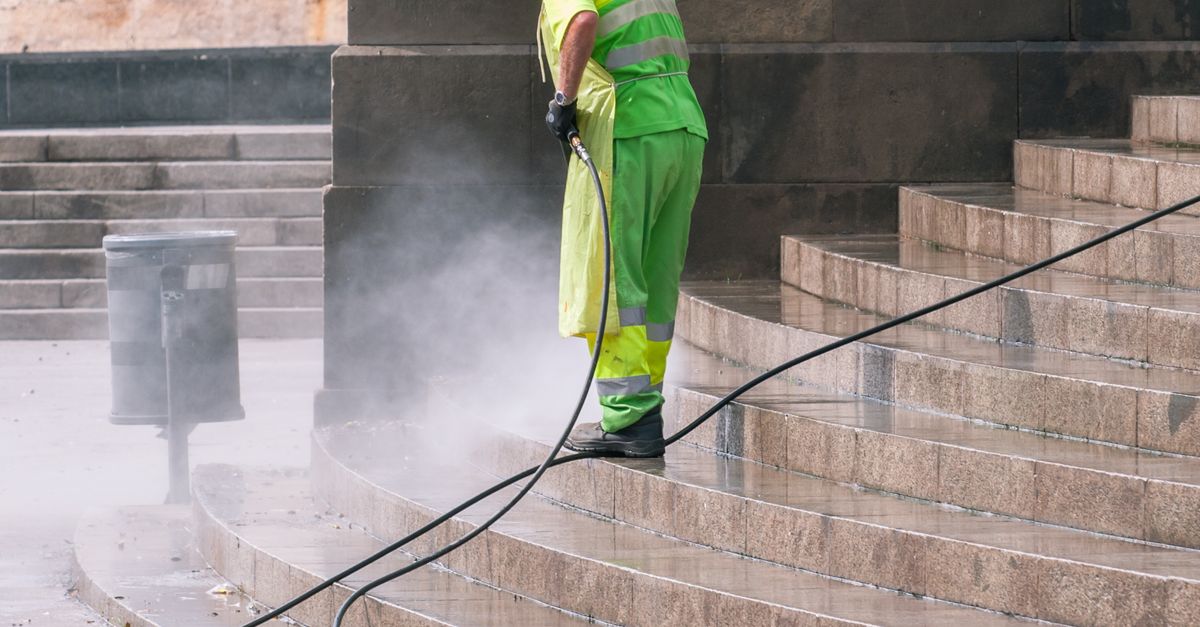
I’ve rented the 3000 PSI gas beast from Home Depot twice. Both times I spent $65 for the day, cleaned my patio in 45 minutes, and then wrestled a wet, 80-pound machine back into my car. The third year I bought a $160 electric Sun Joe that weighs 16 pounds and lives in my basement. I’ve used it eight times since then—decks, siding, the rental’s back stairs—and it’s paid for itself twice over.
Here’s the thing most “best pressure washer” roundups won’t tell you: if you’re a homeowner doing seasonal cleaning, you probably don’t need the model they’re pushing. You need less PSI than you think, the right nozzle angle for your surface, and the answer is almost always electric unless you’re washing your driveway monthly.
Do you actually need to buy one?
Before you spend anything, run the math. Pressure washer rentals at big-box stores run $50–75 per day. If you’re cleaning your deck once a year and that’s it, renting is the right call—you’re three years out from breaking even on even a budget electric model.
Buy if:
- You’ll use it 3+ times per year (deck, patio, siding, walkways)
- You have multiple outdoor cleaning tasks (gutters, lawn furniture, tools)
- You’re maintaining a rental property or second home
- You hate the rental-return hassle or don’t have a vehicle that fits a gas unit
Rent or skip if:
- You’re doing a one-off job (prepping for deck staining, spring patio clean)
- You’re a renter (most leases prohibit pressure washers due to water-intrusion risk—check yours first)
- You’d rather pay someone $150 to clean your driveway than store equipment
I keep mine because I do light DIY cleaning on my properties every few months. The electric model takes up less space than a shop vac and starts every time.
What PSI and GPM actually mean—and what you need
PSI (pounds per square inch) is pressure; GPM (gallons per minute) is water flow. Together they determine cleaning power, but here’s what nobody tells you: more PSI does not mean better results. It means faster damage to soft materials.
Most homeowner tasks need way less pressure than the 3000+ PSI models advertised. According to manufacturer specifications and UL safety standards for powered cleaning equipment, here’s what you actually need for common jobs:
| Task | PSI needed | GPM | Nozzle angle | Notes |
|---|---|---|---|---|
| Wooden deck | 1200–1500 | 1.2–1.5 | 25°–40° (green/white) | Higher PSI gouges wood |
| Vinyl siding | 1300–1600 | 1.2–1.4 | 25°–40° (green/white) | Stay below 1800 PSI to avoid blowing water behind siding |
| Concrete patio | 2500–3000 | 2.0–2.5 | 15°–25° (yellow/green) | Can handle higher pressure; focus on GPM for efficiency |
| Driveway (concrete) | 3000–3500 | 2.3–3.0 | 15°–25° (yellow/green) | Oil stains need dwell time + degreaser, not just PSI |
| Brick/stone | 2000–2500 | 1.5–2.0 | 25° (green) | Check mortar condition first—weak joints blow out |
| Gutters (exterior) | 1500–2000 | 1.2–1.5 | 25°–40° (green/white) | Interior gutter cleaning = garden hose, not pressure washer |
| Cars/windows | 1200–1500 | 1.2 | 40° (white) | Anything higher risks glass/paint damage |
I learned the “more is better” lesson the hard way: I borrowed a contractor’s 3200 PSI gas unit for a deck job and left visible grooves in three boards before I backed off. A 1500 PSI electric would’ve done it right the first time.
Bottom line: If you’re mostly cleaning decks, siding, and patio furniture, 1300–1800 PSI is your sweet spot. You don’t need—and shouldn’t use—the 3000+ PSI models marketed to homeowners.
Nozzle angles: the detail that prevents damage
Most pressure washers come with a color-coded nozzle set. The PSI rating on the box means nothing if you’re using the wrong nozzle angle—this is the part that determines how that pressure actually hits your surface.
Standard nozzle angles:
- 0° (red): Pinpoint jet stream. Maximum force concentrated in one spot. For stripping paint, cutting weeds out of concrete cracks, or tasks you’d normally use a chisel for. I don’t use this on anything I want to keep intact.
- 15° (yellow): Narrow fan. High impact for concrete, heavily stained driveways, or preparing surfaces for paint. Still aggressive—keep your distance.
- 25° (green): Medium fan. This is my default for most jobs—decks, patios, siding, brick. Wide enough to cover area efficiently, narrow enough to remove grime.
- 40° (white): Wide fan. Lowest impact. Use for cars, windows, delicate siding, or anything you’re testing for the first time.
- Soap nozzle (black): Low pressure for applying detergent. Won’t clean on its own.
The difference between a 15° and 40° nozzle at the same PSI is the difference between stripping paint and rinsing off loose dirt. I’ve watched someone switch from red (0°) to green (25°) on the same machine and go from gouging wood to cleaning it perfectly.
When manufacturer guides say “1500 PSI for wood decks,” they mean 1500 PSI through a 25° or 40° nozzle held at proper distance. Use a 0° nozzle on that same deck and you’re carving your initials in it.
Electric vs. gas: the real trade-offs
Every review tells you “electric for light use, gas for heavy use,” but that’s not the decision point. Here’s what actually matters:
Noise
- Electric: 75–85 dB (about as loud as a vacuum cleaner)
- Gas: 95–105 dB (lawn mower to chainsaw range; OSHA recommends hearing protection above 85 dB)
If you live in a neighborhood with noise ordinances or you’re cleaning early on a weekend, electric wins. I’ve run my Sun Joe at 8 a.m. on a Saturday without a single neighbor complaint. The gas rental? I felt like I owed apology beers.
Runtime and refueling
- Electric: Unlimited runtime as long as you have an outlet and water. Use an extension cord rated for outdoor use (12-gauge minimum for 100 feet).
- Gas: 2–4 hours on a tank, then you’re waiting for the engine to cool before refueling. Small engines hate sitting—expect carburetor cleaning or stabilizer treatments if you store it over winter.
I’ve never had my electric model fail to start. The gas rental took four pulls and a choke adjustment every single time.
Maintenance
- Electric: Essentially zero. Flush the pump after use, store above freezing. That’s it.
- Gas: Oil changes, spark plug replacement, fuel stabilizer, carburetor cleaning. Budget $30–50/year in upkeep or one frustrating afternoon per season.
Cost over time
| Model type | Purchase price | Year 1 cost | Year 3 cost | Year 5 cost |
|---|---|---|---|---|
| Electric (budget) | $150 | $150 | $150 | $150 |
| Electric (mid-range) | $280 | $280 | $280 | $280 |
| Gas (entry) | $400 | $450* | $550* | $650* |
| Rental (2x/year) | — | $120 | $360 | $600 |
*Gas cost includes fuel, oil, maintenance supplies
For homeowners using a pressure washer 2–4 times per year, electric pays for itself in year two and never asks you to drain the carburetor.
Safety: this is not a garden hose
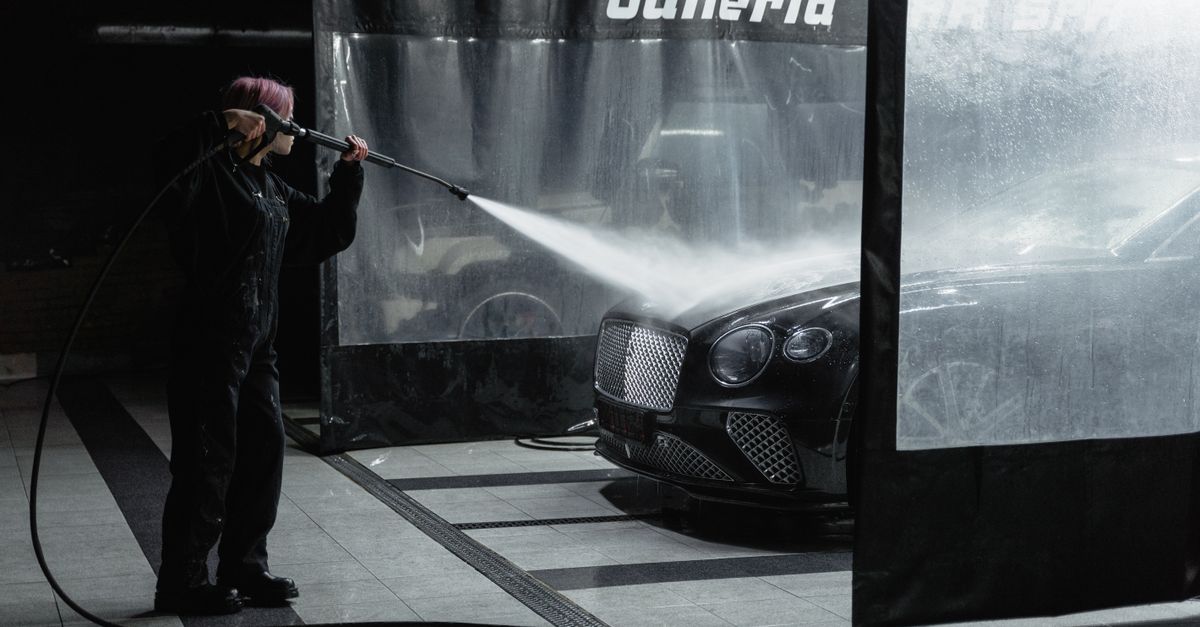
Pressure washers can cause serious injuries. At close range, even a 1500 PSI stream can cut skin deep enough to require stitches. OSHA safety guidance for powered cleaning equipment emphasizes operator training and proper protective equipment—this applies to homeowners just as much as commercial users.
Non-negotiable safety rules:
- Never point at yourself, another person, or animals. Not even as a joke.
- Wear eye protection and closed-toe shoes. Long pants if you’re cleaning low surfaces (splashback).
- Keep the nozzle at least 12 inches from your body, 24+ inches from delicate surfaces like wood siding or shingles.
- Test on an inconspicuous area first. I’ve seen someone strip paint off their garage door in one pass because they started with a zero-degree nozzle at six inches.
- Use both hands on the wand for any overhead work or extended sessions. Recoil and fatigue are real.
The zero-degree (red) nozzle that comes with most models? I don’t use it. Ever. The 15-degree or 25-degree fan nozzles handle every homeowner task without the injury or damage risk.
If you’re cleaning above shoulder height (second-story siding, gutters), the recoil and angle make it easy to lose control. I’ve used a ladder exactly once with a pressure washer and decided hiring someone for second-story work was worth $100.
Model recommendations by scenario
These are models I’ve either used myself or spec’d for rental property projects. Prices and specs verified as of August 2026 via manufacturer documentation.
Light maintenance: seasonal deck and patio cleaning
Sun Joe SPX3000 — $160–180
- 2030 PSI, 1.76 GPM (electric)
- Weighs 31 lbs; rolls on wheels
- Includes five nozzle tips (0°, 15°, 25°, 40°, soap) and dual detergent tanks
- 14.5-amp motor with automatic shutoff
- Best for: Homeowners cleaning 2–3 times per year; renters with landlord permission
I’ve put maybe 15 hours on mine over two years. Starts every time, fits in a basement closet, and the detergent tanks mean I’m not juggling bottles mid-clean. The hose is short (20 feet), so factor in an extension cord and a long garden hose. Sun Joe specifications confirm the 2030 PSI rating—enough for wood and vinyl, not overkill.
Seasonal to frequent use: decks, siding, driveways
Kärcher K5 Premium — $350–400
- 2000 PSI, 1.4 GPM (electric)
- Water-cooled induction motor (longer lifespan than universal motors)
- Onboard hose and cord storage
- Vario Power spray wand for adjustable pressure without swapping nozzles
- Best for: Homeowners tackling multiple surfaces monthly; weekend warriors
The K5 is the model I’d buy if I were replacing my Sun Joe today. The water-cooled motor is quieter and rated for longer sessions. Kärcher’s build quality is a step up—metal fittings instead of plastic, better hose, and it doesn’t tip over when you’re dragging it across uneven ground. The Vario wand lets you dial pressure up or down mid-job instead of stopping to swap nozzles.
Year-round DIYer or multiple properties
Ryobi RY803001 — $450–500
- 3000 PSI, 2.3 GPM (gas, Honda GC190 engine)
- 25-foot high-pressure hose
- Onboard storage for nozzles and wand
- 10-inch pneumatic tires for rough terrain
- Best for: Frequent use, heavy-duty cleaning (oil-stained driveways, large patios), or no electrical outlet access
This is the entry point for gas models that won’t die on you after one season. Honda engines are reliable, parts are available everywhere, and 2.3 GPM moves through concrete cleaning noticeably faster than 1.4 GPM electric models. The trade-off: it’s loud, it’s 60+ pounds, and you’re maintaining a small engine.
I’d only go gas if I were cleaning a 1000+ sq ft driveway monthly or working on properties without convenient outlet access.
Budget pick if you’re testing the waters
Sun Joe SPX1000 — $120–140
- 1450 PSI, 1.3 GPM (electric)
- Compact (lighter than the SPX3000)
- Four quick-connect nozzles (0°, 15°, 25°, 40°)
- Best for: First-time buyers; single-surface jobs (deck only, or patio furniture only)
This is the “try before you commit” model. It’s underpowered for concrete driveways but fine for wood decks and siding. If you discover you love pressure washing and want to tackle heavier jobs, upgrade later. If you use it twice and decide it’s not worth the hassle, you’re out $130 instead of $400.
Common mistakes I’ve made (so you don’t have to)

Starting too close to the surface. I gouged a deck board on my first rental because I held the nozzle four inches away. Start at 24 inches and move closer only if you need to.
Wrong nozzle for the job. The red zero-degree tip is not for cleaning your deck. It’s for stripping paint or cutting weeds out of concrete cracks. Use the green 25-degree or white 40-degree tips for nearly everything.
Not testing the spray pattern first. Before you point it at your siding, spray it at the ground from 18 inches away and watch what the nozzle actually does. A 0° nozzle cuts; a 40° nozzle rinses. Know which one you’ve got attached.
Forgetting to test water pressure first. Low water pressure from your hose bib will damage the pump. Run your garden hose into a 5-gallon bucket—if it takes more than two minutes to fill, your inlet pressure is too low. You’ll need a booster or a different water source.
Ignoring the angle. Spraying straight into siding seams or deck board gaps drives water where it shouldn’t go. Angle down or parallel to the surface, never straight in.
Leaving water in the pump over winter. If you live somewhere that freezes, run the pump dry or use antifreeze pump saver. I learned this one from a rental property manager who trashed two pumps before someone told him.
When to rent instead of buy
Rent if you’re doing a one-time job or testing whether you even like pressure washing:
- Driveway cleaning before sealcoating (you’ll hire a crew for the sealcoating anyway)
- Deck prep before staining (the stain job costs $800; the rental is $60)
- Spring deep-clean to see if you want to own one
Rent if you need higher specs than you’d ever buy:
- Stripping paint off a brick chimney (4000 PSI with a surface cleaner attachment)
- Industrial degreasing (hot water models rent for $100/day; buying one is $2000+)
I still rent for big one-off jobs. When I needed to clean 1200 sq ft of oil-stained concrete at a rental property, I grabbed the 3000 PSI gas unit with a surface cleaner attachment. Took three hours, cost $75, and I didn’t have to store a machine I’d use once.
What you actually need
If you’re a homeowner cleaning decks, siding, and patio furniture 2–4 times a year, you need a 1300–1800 PSI electric model in the $150–350 range with the full nozzle set (0°, 15°, 25°, 40°). Anything higher is overkill. Anything gas-powered is overkill unless you’re washing a driveway monthly or working without electrical access.
The Sun Joe SPX3000 ($160–180) is the best value for most people. The Kärcher K5 Premium ($350–400) is the upgrade pick if you want better build quality and a longer-lived motor. The Ryobi RY803001 ($450–500) is for the small percentage of homeowners who actually need 3000 PSI and don’t mind maintaining a small engine.
Run the cost-per-use math before you buy. If you’re only cleaning once a year, rent. If you’re cleaning three times a year, a $160 electric breaks down to $13 per cleaning session by year four—cheaper than hiring someone, quieter than gas, and it starts every time.
And whatever you buy, learn your nozzle angles before you pull the trigger. Start with the 40-degree white tip on every new surface, keep the wand 12 inches from your body, and work your way up to higher pressure only if you need it. I’ve got the scar on my shin from learning that one the other way.
Affiliate disclosure: This article contains affiliate links. If you purchase through these links, FixerDaily may earn a commission at no additional cost to you.
For more guidance on choosing the right tool for your skill level and project scope, see Drill vs Impact Driver for Home Projects: Which One First?—the same “don’t overbuy” principles apply when you’re building your DIY toolkit.